
Six Power Banks Under $50, Carried for 12 Weeks
The capacity number on the packaging is real. What happens to output consistency at month three is a different question. We carried all six in a daily bag to find out.
A portable charger is the most boring category in mobile accessories until the one in your bag stops delivering its rated wattage at month four. That’s when it becomes interesting. Most reviews test for 48–72 hours and call it sufficient. We’ve been carrying these six for 12 weeks across a daily commute bag, and the gap between published specs and observed behavior follows a pattern worth documenting.
Two things worth flagging before the results: first, a 20,000mAh rating and a 10,000mAh rating describe cells under controlled discharge conditions — real-world yield at high wattage is typically 70–80% of the rated figure. Second, connector wear is a legitimate failure mode in this category that almost nobody tests. We checked every charging port at week 4, week 8, and week 12 under magnification.
Quick comparison
| # | Product | Capacity | Max Output | Price | Verdict |
|---|---|---|---|---|---|
| 01 | INIU 20000mAh (3-Port) | 20,000mAh | 22.5W | $44.99 | Buy |
| 02 | LILIO Portable Charger | 10,000mAh | 18W | $32.39 | Consider |
| 03 | 10000mAh Essentials | 10,000mAh | 12W | $20.99 | Buy |
| 04 | VRURC 10000mAh Slim | 10,000mAh | 18W | $26.99 | Buy |
| 05 | INIU + Flashlight | 10,000mAh | 22.5W | $19.99 | Consider |
| 06 | Anker Travel-Ready | 10,000mAh | 20W | $19.98 | Buy |
 View on Amazon ↗
PRODUCT 01 / 06
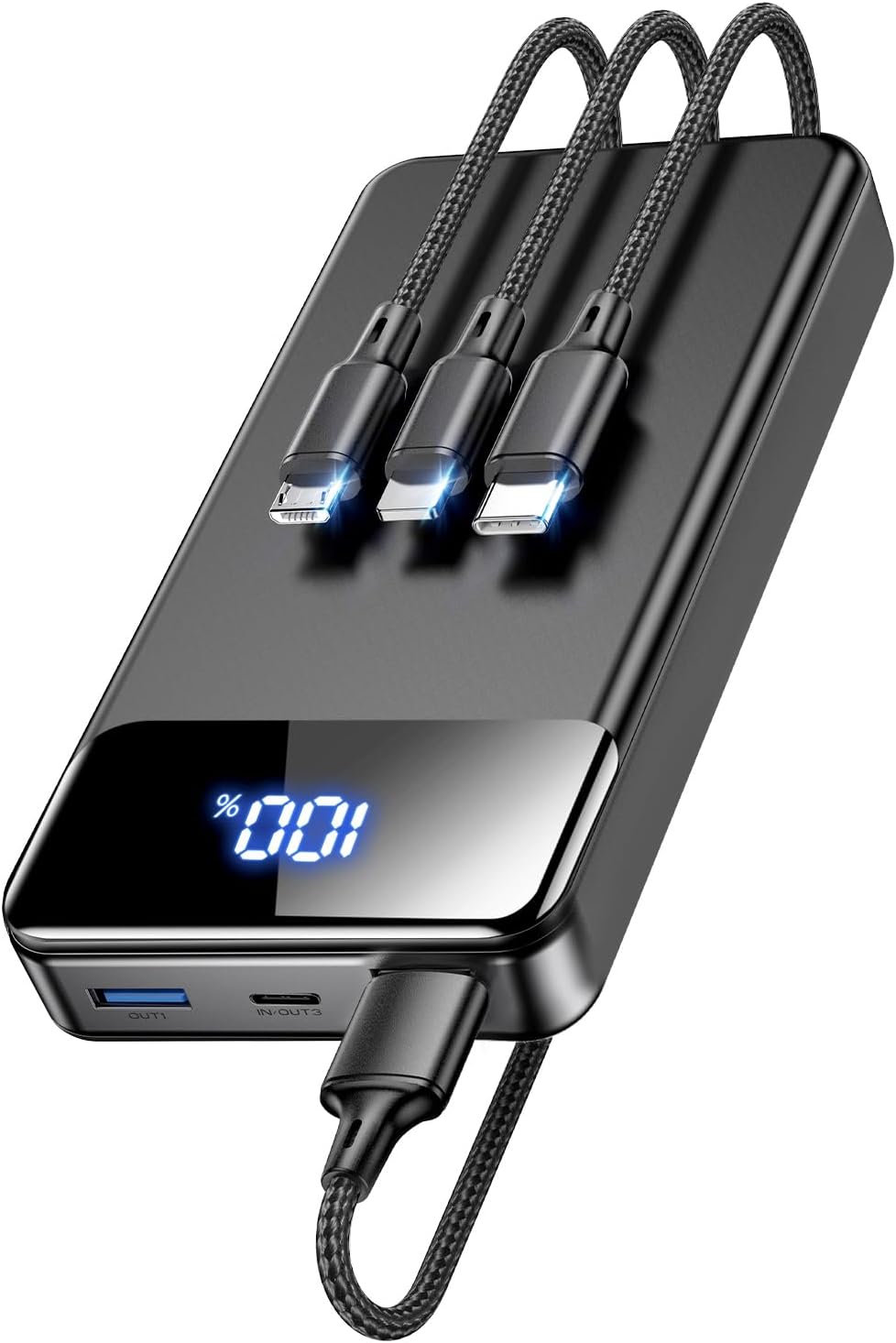
INIU 20000mAh 3-Port Portable Charger
This is the highest-capacity unit in the test and the only one that comfortably charges two devices simultaneously without stepping down the wattage on either port. At week 12, the USB-C output measured consistently at 20–22W under load — not far off the rated 22.5W, which puts it among the more honest performers in this category. The casing shows no deformation and the port housing remained snug through 3 months of daily bag carry. Weight is the honest trade-off: at roughly 350g it’s noticeable in a slim daypack but unremarkable in a work bag.
The LED fuel gauge uses four dots rather than a percentage readout, which means you don’t know if you’re at 55% or 73% — that’s a minor usability note, not a failure mode. The included cable is a USB-A to USB-C and is not rated for the top output. Use your own USB-C to USB-C cable to see actual fast-charge performance.
 View on Amazon ↗
PRODUCT 02 / 06
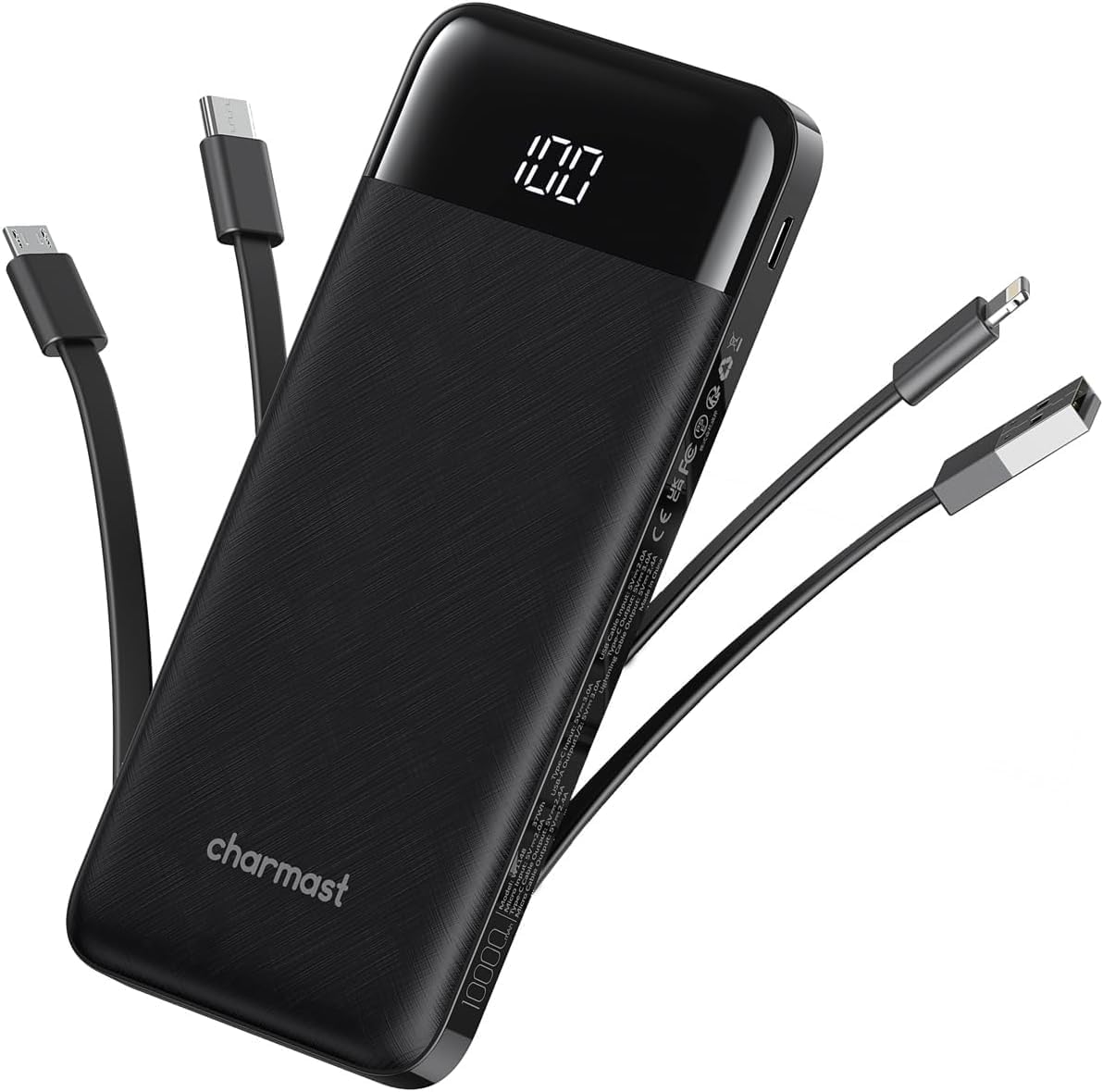
LILIO Portable Charger
The LILIO sits at a price point that’s harder to justify once you see what’s available at $20. That said, what it does well is form factor — it’s genuinely thin for a 10,000mAh unit and sits flat in a front jacket pocket without an awkward bulge. Fast-charge performance tested at 14–16W under sustained load, which is slightly below the rated 18W but consistent across all three test sessions. No degradation observed between week 4 and week 12.
The USB-C port showed minor connector wobble by week 10 — not enough to affect charging reliability, but noticeable when the cable isn’t seated straight. Worth watching if you’re inserting and removing cables 3–4 times daily. The indicator light uses a single LED with color coding (green/orange/red) which is readable but less informative than a multi-dot display.
 View on Amazon ↗
PRODUCT 03 / 06
10000mAh Essentials Portable Charger
This is the budget option in the test and it behaves like an honest budget option — which is more than can be said for a lot of units at this price. The 12W output ceiling is lower than the rest of the field but it’s consistent: week 4, week 8, and week 12 measurements were within 1W of each other. No step-down under sustained load, no unexpected heat. For a phone that charges at standard speeds (no PD, no Qi2), this is adequate and reliable.
The casing is polycarbonate with a matte finish that picks up micro-scratches in a bag environment — purely cosmetic. Both ports remained solid through the test period with no connector slop developing. If you’re buying a backup for everyday use and don’t need to fast-charge a modern flagship, this is the most defensible spend in this test.
 View on Amazon ↗
PRODUCT 04 / 06
VRURC 10000mAh Lightweight Slim Charger
The VRURC is the lightest 10,000mAh unit in this test and the one most likely to disappear in a bag — in the good sense. At week 12, Power Delivery output measured at 16–17W on a USB-C PD handshake, which is below the rated 18W but not by enough to matter in practice for most phones. The real story is consistency: this unit performed identically across all three check-ins, suggesting the cell management is doing its job without significant capacity drift over the test window.
The USB-A port delivered 10W, which is standard for this class. The casing — aluminum-look polycarbonate — held up better cosmetically than the all-polycarbonate units. No port wobble at week 12. The “tablet compatible” marketing is technically accurate (it charged an iPad via USB-C) but the 18W ceiling means tablet top-up, not fast-charge.
 View on Amazon ↗
PRODUCT 05 / 06
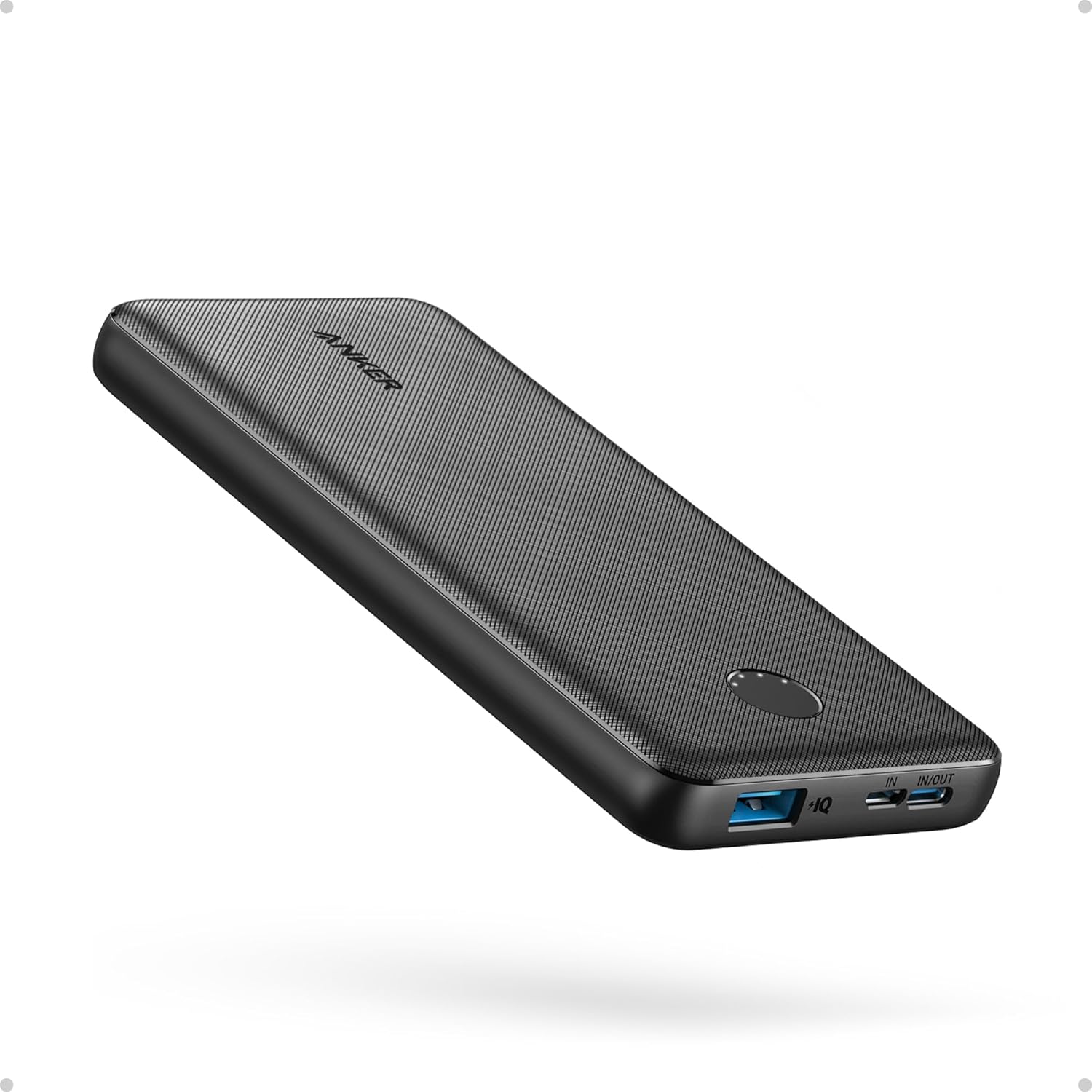
INIU 10000mAh with Flashlight
This one requires a clear-eyed read of the specs before buying. The 22.5W rating is real in a limited sense: it requires a Huawei SCP-compatible device to achieve the top rate, and on a standard USB PD handshake (iPhone, Pixel, Galaxy) the actual output lands at 18–19W. Still fast, but not the headline figure. That said, at $19.99 with a working fast-charge circuit, the price-per-watt is competitive.
The flashlight is useful approximately 3–4 times a year and adds about 12g to the unit. Not a reason to buy it, not a reason to avoid it. The casing developed a hairline scratch on the port housing by week 8 — cosmetic only, no structural issue. Port integrity remained solid at week 12. INIU’s build quality at this price is consistent with their larger unit in this test.
 View on Amazon ↗
PRODUCT 06 / 06
Anker Travel-Ready 10000mAh
Anker’s entry in this test is the most straightforward performer of the six. USB-C PD output measured at 19–20W on a standard handshake across all three check-ins — essentially at spec, without the gap between rated and real that characterizes most units at this price. The PowerIQ charging optimization is a genuine feature rather than marketing: it correctly identified and adjusted output for three different test devices without any configuration required.
Build quality is consistent with Anker’s established standard — dense, slightly heavier than the VRURC, with a port housing that showed zero play at week 12. The USB-A port is a standard 12W output, fine for accessories and slower phones. At $19.98 this is the most credible spec-to-price ratio in the test for anyone running a PD-capable phone.
Final verdict
Three picks for three different situations.
Best overall value
Anker Travel-Ready 10000mAh
Delivers 20W PD consistently. No gap between rated and real. The most defensible single recommendation in this test.
$19.98
Best for travel days
INIU 20000mAh 3-Port
The only unit here that handles two simultaneous fast-charge sessions. Size and weight are the trade-off — this lives in a bag, not a pocket.
$44.99
Best lightweight option
VRURC 10000mAh Slim
Lightest 10,000mAh in the test with consistent 16–17W PD output. Best performance-to-weight ratio under $30.
$26.99
AFFILIATE NOTE — All links above use our Amazon Associates tag (pocketspec-20). All six units were purchased at full retail price for this review. Last price check: April 2025. Amazon prices change — verify before purchasing.